









Checkweighers
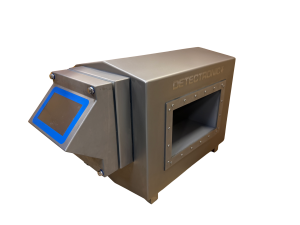
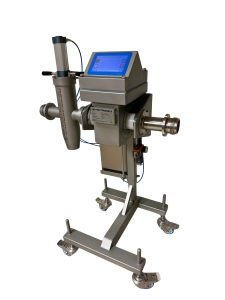
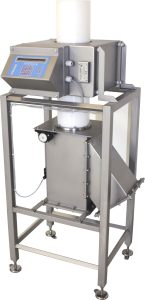
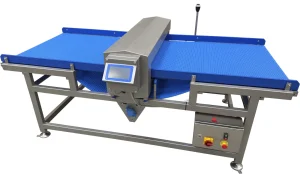
Dynamic weight control for packed product. Available as a standalone checkweigher, or as a combination system where weighing and metal detection happen at the same point in the line.
StandaloneCombination with detectorHygienic stainlessOne control system
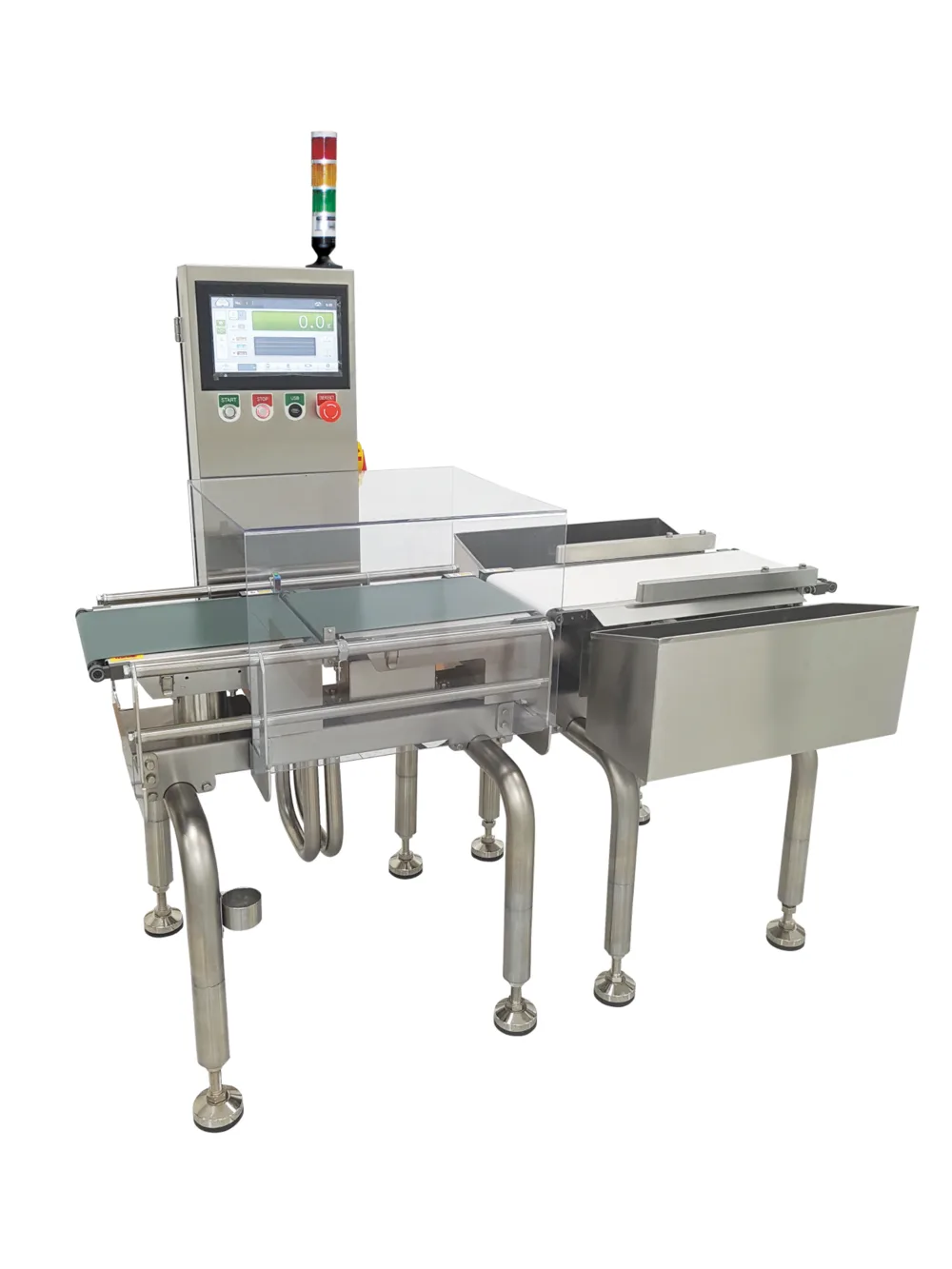
Standalone, or combined with metal detection
Standalone checkweigher
Weight control alone, where metal detection is handled elsewhere in the line or is not required at this point.
- Dynamic weighing of packed product
- Automatic reject of out-of-tolerance packs
- Hygienic stainless construction
- Production statistics and giveaway reporting
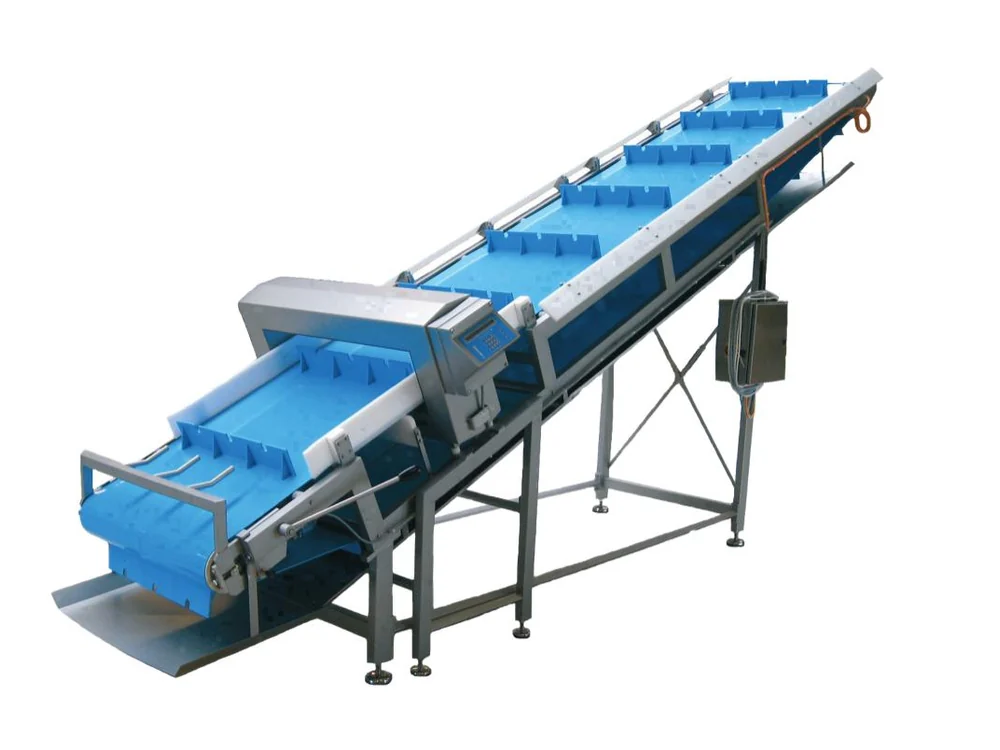
Combination: checkweigher + metal detector
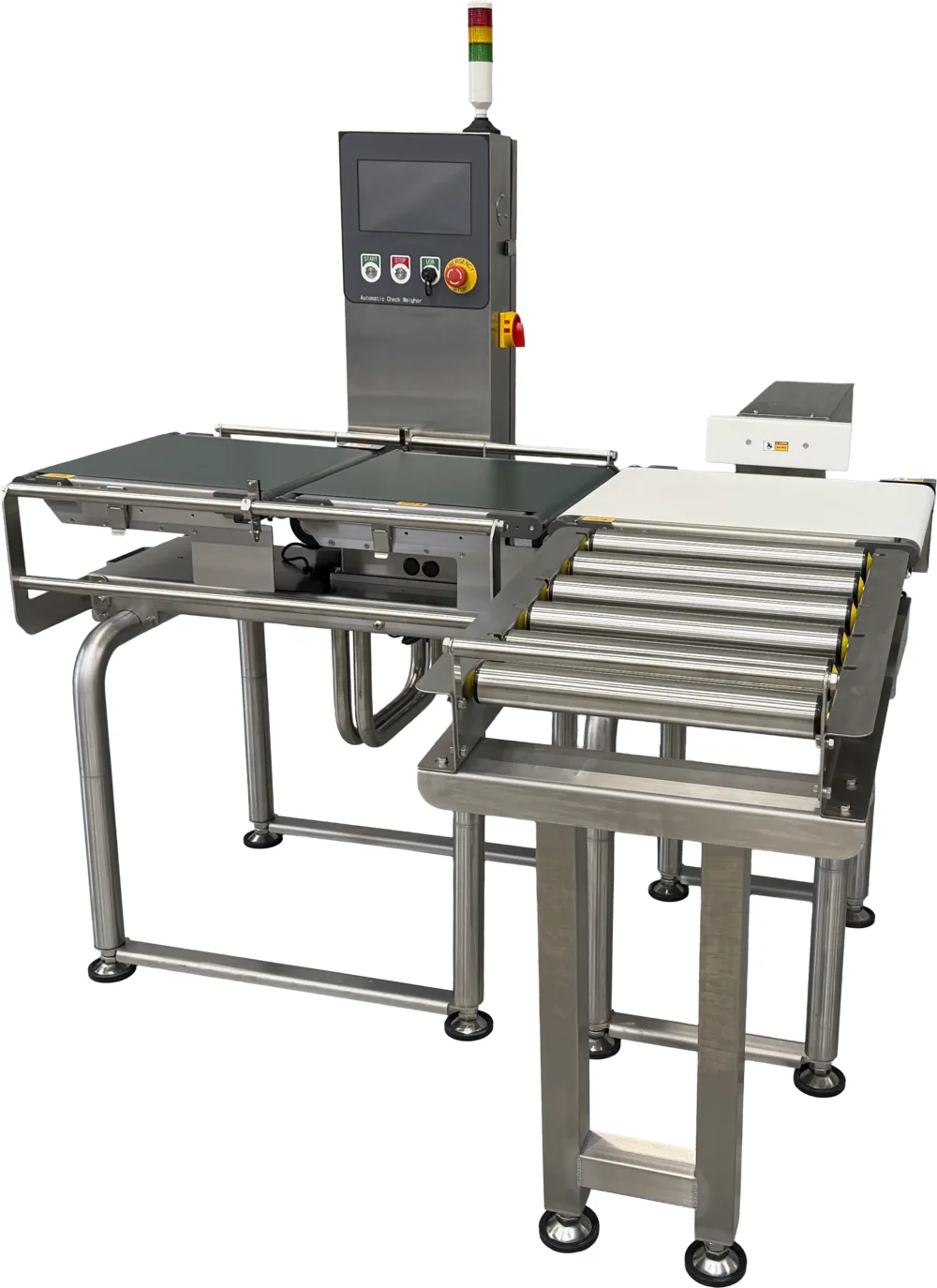
Both functions in one frame with one control system. Shorter installation, fewer product transfers, one service visit.
- Less line length than two separate machines
- Fewer transfer points, so fewer jams and less product damage
- One set of product programmes to maintain
- Separate reject streams — underweight and contaminated product must not share a bin
Weighing and detection happen at the same point anyway
On most packing lines the check for weight and the check for contamination sit within a metre of each other — which means two frames, two infeeds, two outfeeds and two transfer points where product can tip or jam.
A combination system removes one of each. There is also a practical service argument: one supplier, one control system, one point of contact when something needs attention, and one visit when it needs calibrating.
| Configurations | Standalone checkweigher, or combination system with metal detector |
|---|---|
| Construction | Hygienic stainless steel |
| Weight range and accuracy | Depends on product and line speed — On request |
| Throughput | Matched to the packing line — On request |
| Reject | Automatic, with separate streams for underweight and metal on combination systems |
| Reporting | Production statistics and giveaway data |
| Detection (combination) | 607 or 608 platform, specified as for a standalone tunnel detector |
Weight ranges and throughput figures are quoted per application. Tell us the pack format and line speed and we will confirm what is achievable.
What is an industrial checkweigher?
An industrial checkweigher is an automatic weighing machine that weighs every pack as it travels along the production line and removes any pack that falls outside a set weight tolerance. It works in-line at production speed, so nothing has to be taken off the line to be checked.
In food production a checkweigher does two jobs at once. It protects the customer, by making sure a pack contains what the label says it contains. And it protects the producer, by showing how much product is being given away above the target weight — which on a high-volume line is usually the fastest cost saving available anywhere on the packing hall floor.
How dynamic weighing works
A checkweigher has three short conveyor sections. The infeed belt sets the spacing between packs so that only one pack is on the scale at a time. The weigh belt sits on the load cell and takes the measurement while the pack is moving. The outfeed belt carries the pack away and, if it is out of tolerance, presents it to the reject device.
Because the pack is weighed in motion, the raw signal contains the weight of the product plus vibration, belt movement and any air movement around the machine. The control system filters that signal and reports a settled weight. The faster the line runs and the lighter the pack, the shorter the window available to settle — which is why weight range, accuracy and throughput can only be quoted together, for a specific product on a specific line.
What limits weighing accuracy
- Line speed and the spacing between packs
- Pack weight, shape and how stable it stands on the belt
- Vibration from neighbouring machines and from the floor
- Draughts and air movement, particularly on light packs
- Temperature change across the shift
- How securely the frame is levelled and supported
Detectronic specifies weight range, accuracy and throughput for each line rather than publishing one headline figure, because the achievable accuracy depends on what is being weighed and how fast it is moving. Tell us the product, the pack weight and the packs per minute, and you get figures that apply to your line.
Checkweigher load cells
The measurement itself is made by a load cell, a sensor that converts the downward force of the pack into an electrical signal. Two designs are common in food production. Strain-gauge load cells are robust, tolerant of the knocks a packing hall delivers and well suited to heavier packs. Electromagnetic force restoration cells resolve much smaller differences and are used where the tolerance is tight or the pack is light. Which one suits your line follows from the pack weight and the tolerance you have to hold, so it is specified with the machine rather than chosen in advance.
Checkweigher reject systems
Detecting an out-of-tolerance pack is only half of the job. The pack then has to leave the line reliably, without damaging the product and without stopping production. The reject mechanism is chosen for the pack rather than for the machine, and is specified per line.
| Pusher arm | A pneumatic arm pushes the pack sideways off the belt into a bin. Suits firm, stable packs at moderate speeds. |
|---|---|
| Air blast | A jet of compressed air blows the pack clear of the belt. Suits light packs and small items running quickly. |
| Drop flap | A hinged section of the conveyor drops away and the pack falls into a bin underneath. Suits heavier or top-heavy packs that a sideways push would tip over. |
| Retracting nose | The end of the outfeed belt pulls back so the pack drops into a bin. Suits delicate or awkwardly shaped product that should not be struck. |
| Diverter | A swinging arm sweeps the pack into a side lane instead of a bin. Suits lines where rejected packs are reworked rather than discarded. |
Underweight and metal must not share a bin
On a combination checkweigher and metal detector, the two reject reasons have to be kept apart. A pack rejected on weight can usually be opened, topped up and re-run. A pack rejected for metal cannot: it has to be quarantined, examined and recorded, because it is evidence about a possible contamination event on the line. If both reasons empty into the same bin that distinction is gone, and an auditor will say so. That is why our combination systems reject into separate streams.
Hygienic design and washdown
A checkweigher in a food production environment is built to be cleaned, not merely to be wiped. Detectronic supplies checkweighers in hygienic stainless construction, with the open frames, sloping surfaces and removable belts that let water and cleaning agent drain away instead of collecting in corners.
How far that has to go depends entirely on the regime around the machine. A dry goods line that is brushed down and a chilled meat line that is hosed at high pressure twice a day are two different specifications, and the sealing, belt type and protection rating follow from which one you run. Tell us how the machine will be cleaned when you ask for a quote — it changes the build.
Checkweighing by industry
Pack format and washdown regime vary enormously between sectors, and so does the specification that comes out of them:
- Meat and poultry — heavy washdown, variable pack weight
- Fish and seafood — wet, cold and highly corrosive conditions
- Dairy — frequent cleaning cycles and tight fill tolerances
- Bakery — light, easily displaced packs and dusty air
- Pet food — large bags and sacks, high throughput
- Ready meals — trays and sleeves that must not be tipped
- Spices and ingredients — small pack weights and tight tolerances
Choosing the right checkweigher
Most of a checkweigher quotation is decided by seven answers. Having them ready shortens the conversation considerably:
- What the product is, and what the pack format is
- Target weight and the tolerance you have to hold
- Packs per minute at full line speed
- How much line length is actually available
- How the machine will be cleaned
- Whether metal detection is needed at the same point — if it is, a combination system is usually shorter and cheaper than two machines
- What happens to a rejected pack, and what reporting you need out of the machine
If metal detection is the more urgent question, start with tunnel detectors, and read what HACCP and BRCGS actually require before you specify anything.
Checkweigher questions we are asked most
What is a checkweigher used for in food production?
It weighs every pack in-line and rejects any pack outside the set tolerance, so that underweight packs never reach the customer and overfilling is measured rather than guessed at. It also produces the weight records that a retailer or auditor will ask to see.
What is the difference between a checkweigher and a metal detector?
A checkweigher measures how much is in the pack. A metal detector finds metal contamination inside it. They answer different questions and neither substitutes for the other, which is why many lines run both at the same point.
Can one machine do both weighing and metal detection?
Yes. A combination system puts a checkweigher and a metal detector in one frame under one control system, with separate reject streams for the two reasons. It takes less line length than two separate machines, has fewer transfer points where product can jam, and needs one service visit rather than two.
What accuracy can a checkweigher achieve?
It depends on the pack and the line speed, so a single number would be misleading. Accuracy improves as packs get heavier, more stable and better spaced, and falls as the line speeds up. Detectronic quotes weight range, accuracy and throughput together for your specific product.
Which reject system should I choose?
Match it to the pack. Firm packs at moderate speed suit a pusher arm; light items at speed suit an air blast; tall or unstable packs suit a drop flap; delicate product suits a retracting nose. The choice is made per line, not per machine.
Do underweight and contaminated packs need separate reject bins?
Yes, on any line where a checkweigher and a metal detector share a frame. An underweight pack can be reworked; a pack rejected for metal must be quarantined and investigated. Sharing one bin destroys the distinction and will be raised at audit.
Related
Tunnel detectors — if you need metal detection without weight control.
Conveyors and convergers — for feeding and lane management around the weighing point.