










Free fall detectors
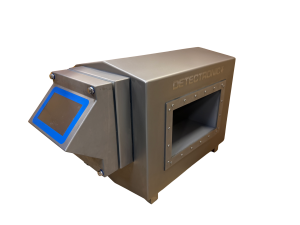
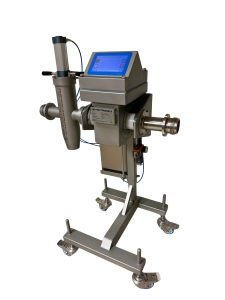
Fitted into the drop pipe — above a bagging machine, between sifter and silo, or at intake weighing. When metal is detected a high-speed pneumatic valve separates the contaminated portion without interrupting the flow.
Ø60 to Ø32030–300 kHzFF/JS compact · FF/BD bulkFDA-approved lining

Two configurations, one detection platform
Compact model, short reject system
The shorter build, for installations where headroom between the sifter or hopper and the packing machine is limited. Same detection performance, less vertical space.
Typical use: above a bagging machine on a packing line.
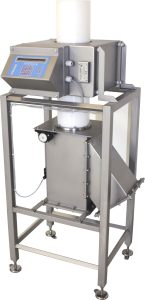
Bulk detector for grains and powders
The heavier-duty build for continuous bulk streams — grain, flour, sugar, feed — where throughput is high and the material is abrasive.
Typical use: intake, transfer and silo feed.
Reject design follows the material. A Y-type rejection system suits flake material; powders get a more hygienic rejection design that will not hold product. Tell us the material and we will specify the right one — this is where most free-fall installations succeed or clog.
High throughput without a conveyor
Product in free fall is moving fast at the point of detection. From the moment metal registers to the moment the valve must have closed past it, there are fractions of a second. That imposes two requirements: fast signal processing, and a valve positioned close to the coil.
This makes free-fall systems particularly suited to powders, granulates and other loose products moving between processing stages. The detector and reject system are integrated directly into the product flow, with very few moving parts and minimal space required around the line.
All three metal groups in one pass
Ferrous, non-ferrous and stainless steel are all detected in the same passage, which matters in a powder line because the fragments that actually turn up — sieve wire, mill wear, screw-flight and airlock debris — are usually stainless. Reject volume is worth calculating in advance on a high-value ingredient: at a given flow rate and valve response time, each event diverts a predictable quantity, and that figure decides how the reject container is sized.
| Models | FF/JS compact with short reject system, FF/BD bulk detector for grains and powders |
|---|---|
| Sizes | Ø60 to Ø320 |
| Frequency | 30–300 kHz depending on platform and product |
| Detection | Magnetic and non-magnetic metal in free-falling bulk product |
| Reject valve | High-speed pneumatic. Hygienic design with no critical edges to prevent build-up and clogging |
| Reject lining | FDA-approved plastic for food contact applications |
| Reject types | Y-type for flake material · hygienic design for powders |
| Applications | Powders, granules, grain, sugar, spices, dried fruit, nuts, plastic granulate |
| Installation | Into the drop pipe — above bagging machine, after sifter, at intake — On request for the specific arrangement |

When free fall is the right answer
- The product is dry and flows freely
- There is a vertical drop in the plant, typically before the packing machine
- You want to avoid breaking a belt into the line
- Production runs continuously and a stop is expensive
Is the product wet or viscous? Then look at pipeline detectors instead.
Our unique Service Exchange Concept keeps the line running. If an electrical fault occurs, the complete control unit can be swapped in under three minutes. You get a replacement unit immediately and return the faulty one to us for analysis and repair — so you are not waiting on a repair before you can restart.