
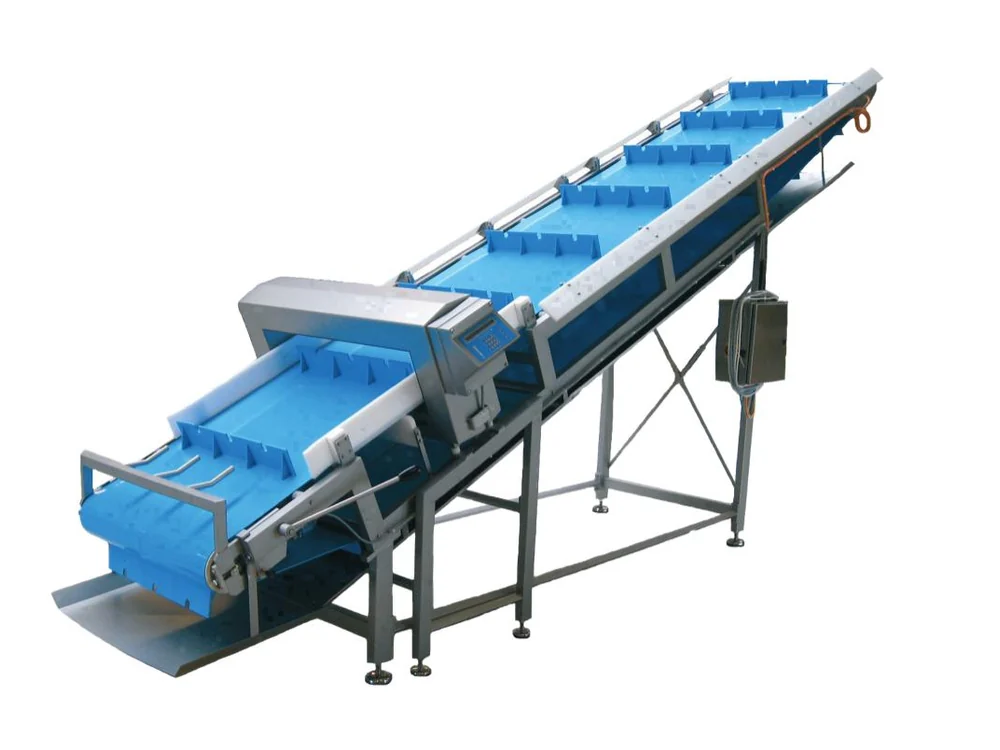










Metal detection for poultry processing
Poultry processing combines high line speeds with a wet, chilled product that can create significant product effect. Reliable detection therefore depends on both the detector performance and a reject system designed for the actual product flow.
Where metal contamination can come from
- Blade and cutting-disc fragments from automatic deboning and portioning equipment
- Shackle and hanger parts from the overhead line
- Machine wear parts — springs, bushings, fasteners from high-speed equipment
- Staples and clips from crates and packaging
- Needle fragments where injection or marination is used
High speed changes how the complete system must be designed
On a fast poultry line the detector will register the metal in time. The question is whether the reject mechanism can act on the right item. On densely packed belts that sometimes means rejecting neighbouring items to be certain — a trade-off between product loss and safety that should be calculated before the system is chosen.
At the same time, chilled and wet poultry can create a strong product effect, particularly with brined or marinated products. Correct product setup and stable product programmes are therefore important for maintaining good sensitivity while avoiding unnecessary false rejects.
Not sure what can be detected in your specific product? Send us a sample. You get a written test report with false reject rate and probability of detection — free and normally within a week.

What we typically supply
Packing lines
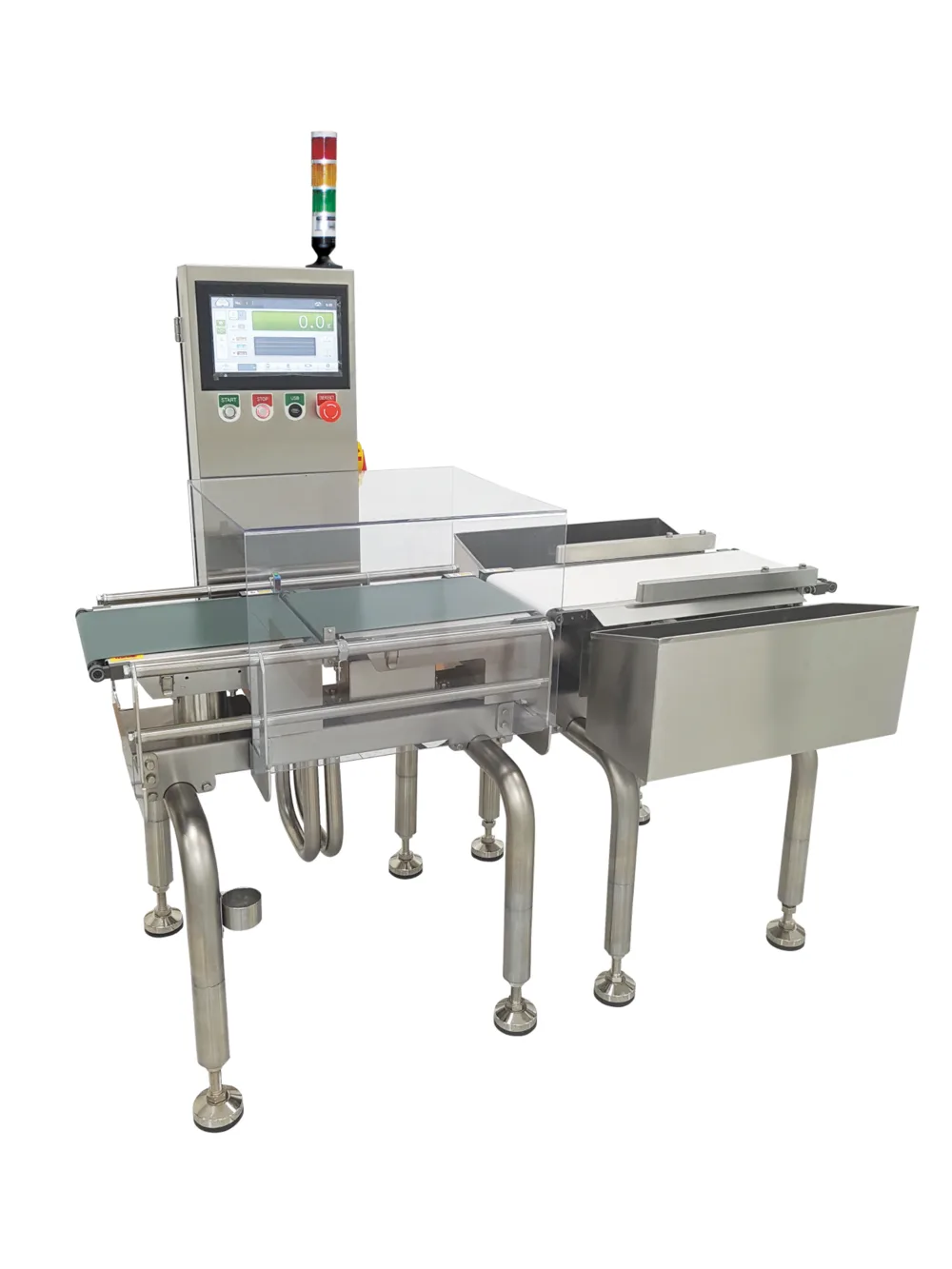
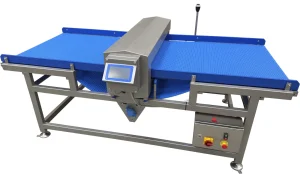
Complete unit with conveyor and fast reject after packing.
Deboning and portioning
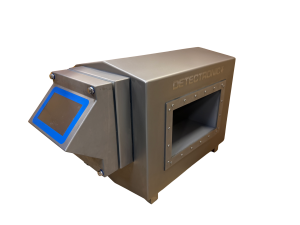
Detector head in the existing conveyor, built for daily washdown.
Marinade and brine
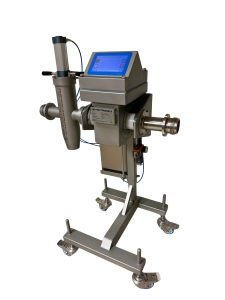
Pipeline detector in the injection or marinade circuit.
Product changes are the practical risk
A poultry plant may run breast fillet, thigh meat, wings and marinated products through the same detector in one shift. Each behaves differently in the field. If they all share one product programme, the programme has to be set for the worst case — which means every other product is being inspected at lower sensitivity than it could be.
Establish a programme per product. We do it during commissioning, and we can re-establish them as part of a calibration visit.