










Metal detection for liquids and pumped food
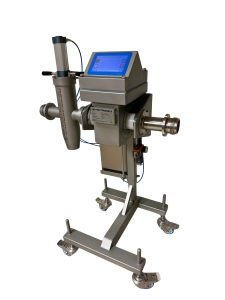
Pumped products are often best inspected directly in the pipeline before filling or packaging. The product passes through the detector in a controlled, consistent flow, creating good conditions for reliable metal detection.
Sources in a liquid process
- Mixer and homogeniser wear — blades, seals and fasteners
- Pump components, particularly on abrasive or high-solids product
- Filter and strainer mesh, which sheds wire when it fails
- Ingredient intake, where powders and additives arrive from sacks and big bags
What can be built into a pipeline installation
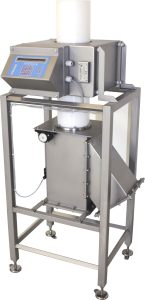
- Integrated reject collection bucket. Diverted product lands in a dedicated container built into the unit rather than on the floor — and it can be locked where the detector is a critical control point.
- Teflon product pipe. Specified where the product or the cleaning regime demands it, and supplied together with a Teflon piston for high-temperature applications.
- Piston for high temperatures. A stainless piston for dense product, or the Teflon piston and product tube for applications above 100 °C.
Filler electrical connector. Allows direct integration with filling machines for synchronized operation — the detector and the filler act as one machine instead of two devices timed by hand, so a detection stops and diverts at the right point in the filling cycle.
Not sure what can be detected in your specific product? Send us a sample. You get a written test report with false reject rate and probability of detection — free and normally within a week.
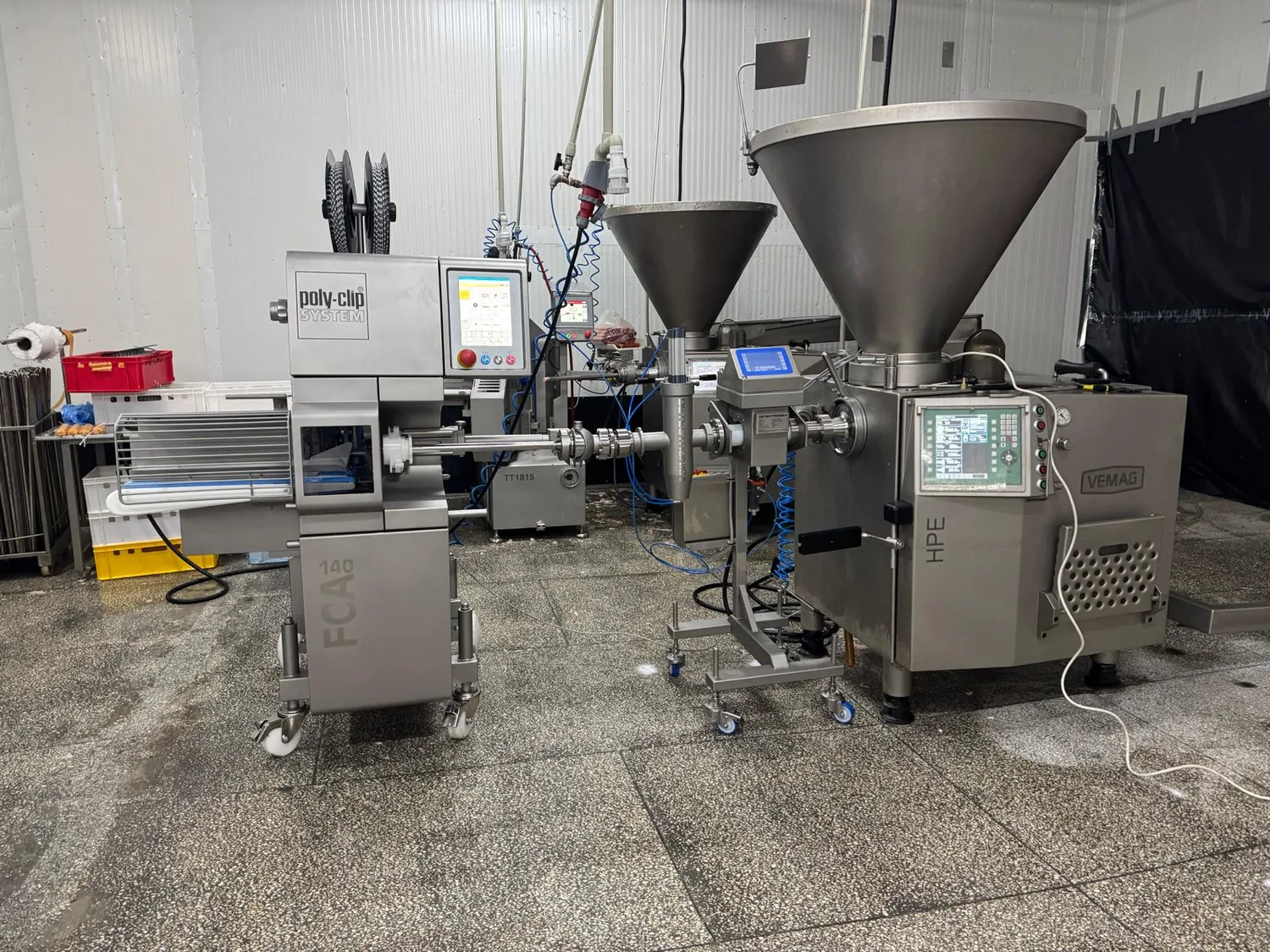
What we typically supply
Pumped product
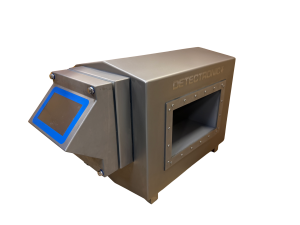
Pipeline detector with hygienic coupling and automatic reject valve.
Filled containers
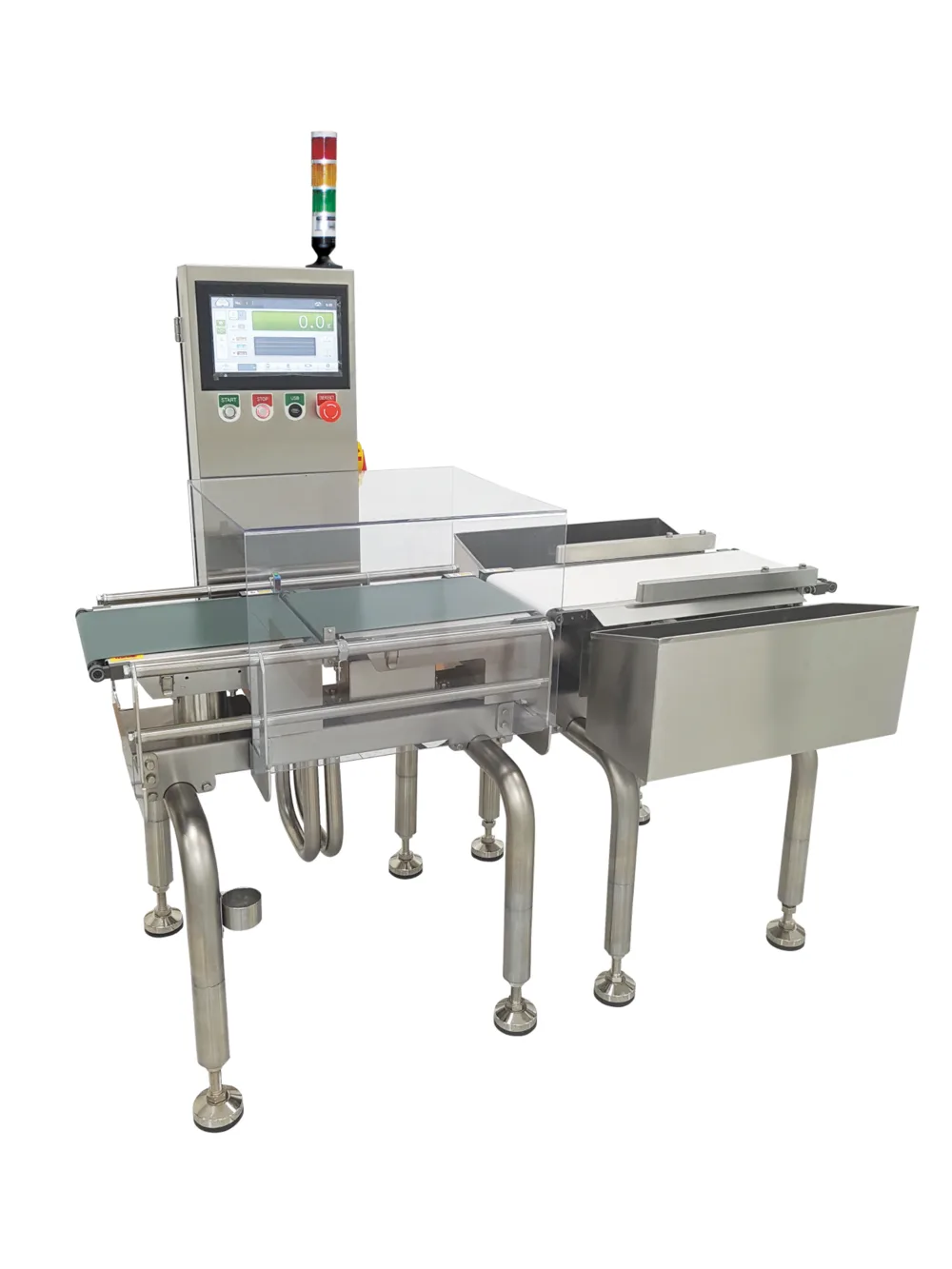
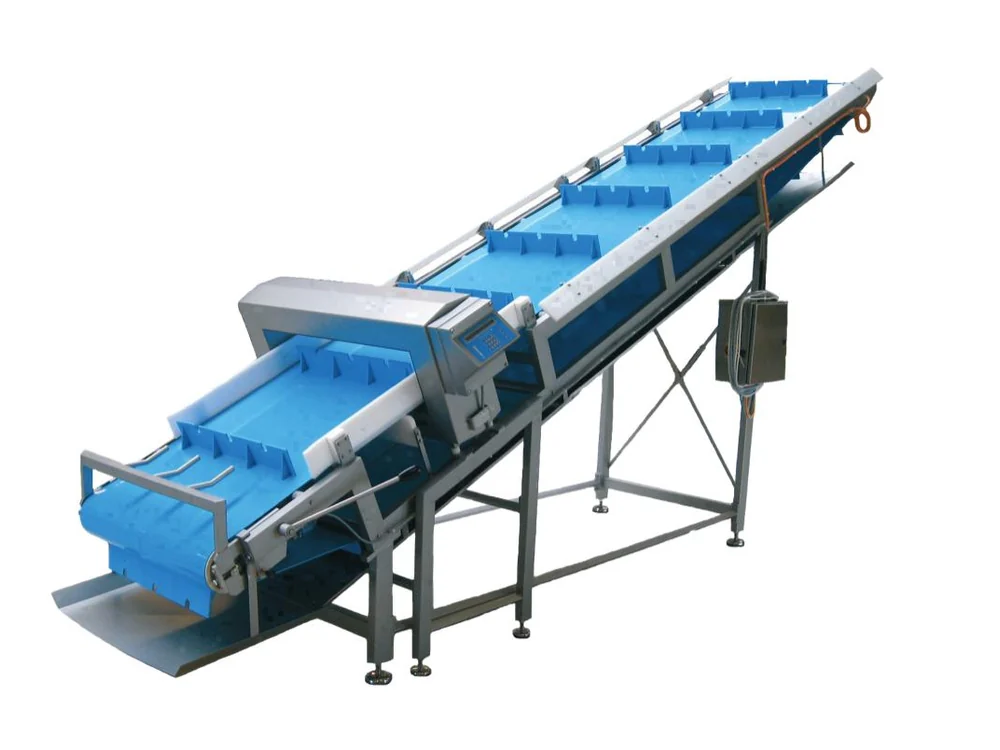
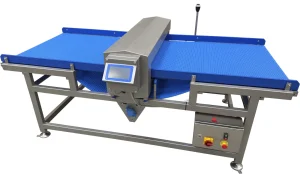
Conveyor system after filling, for jars, bottles and pouches.
Pipeline integration
Free-fall detector at powder and additive intake.
Where should the rejected product go?
A pipeline reject valve diverts a small volume of product together with the detected contaminant. The amount depends on flow rate, pipe size and reject timing.
It is also worth deciding in advance what happens to diverted product. On most standards it cannot simply go back into the batch. Specify a container, and make it lockable if the detector is a critical control point.