










Transportadores de blocos inclinados
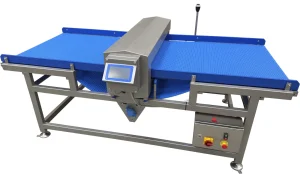
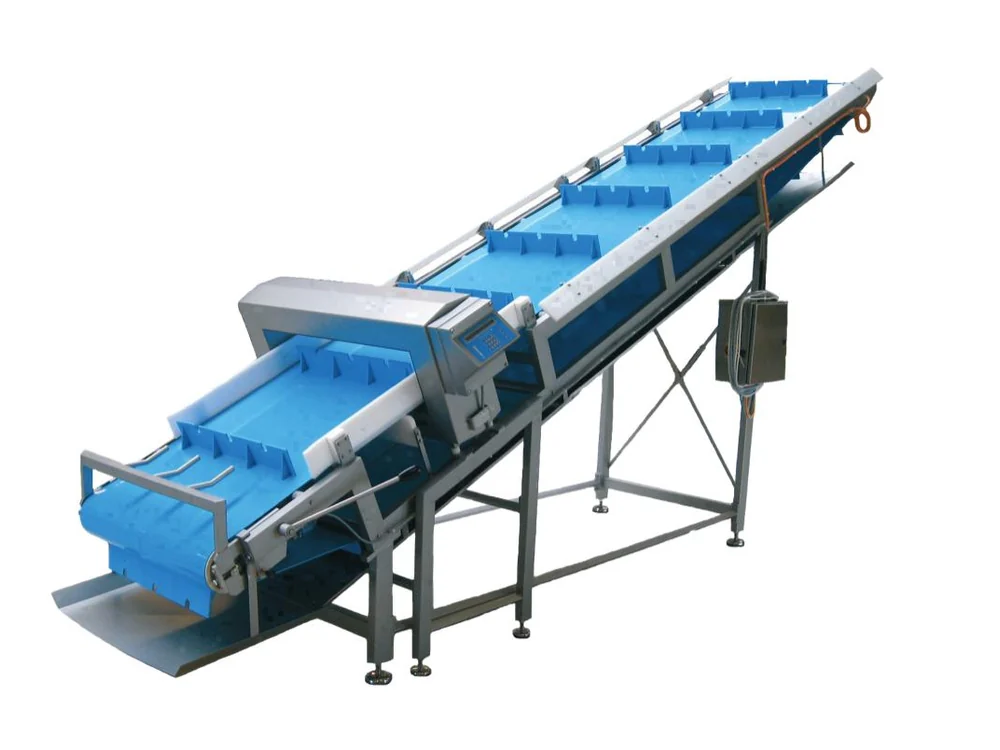
Um transportador inclinado com taliscas que eleva o produto do nível do chão até a entrada de um moedor, misturador ou linha de embalagem — com detecção de metais integrada na mesma estrutura, de modo que o produto seja inspecionado durante a subida, em vez de em uma etapa separada.
Correia taliscadaDetecção integradaFeito de acordo com o seu layout
Dois trabalhos, uma máquina, uma etapa de manuseio
A maioria das plantas tem um ponto onde o produto precisa ser elevado — para fora de uma caçamba ou do chão e para dentro de um triturador, misturador ou moega. Essa elevação geralmente é feita por um transportador separado, e a detecção de metais geralmente fica em outro lugar.
A combinação desses processos elimina um ponto de transferência. Menos transferências significam menos danos ao produto, menos derramamentos para limpar, menos espaço ocupado no chão e uma máquina a menos para manter. Isso também significa que a contaminação é detectada antes isso ocorre antes que o material chegue ao moedor, e não depois, o que representa a diferença entre rejeitar um lote e substituir um conjunto de lâminas.
A detecção antes do moedor vale mais do que a detecção depois dele. Um pedaço de metal que chega a um britador danifica a máquina, contamina tudo o que está a jusante dela e transforma um bloco rejeitado em um lote rejeitado. Inspecionar na inclinação o captura enquanto ele ainda é um item único e removível.
O que ele gerencia
Blocos congelados
Blocos de carne e peixe congelados alimentados em um moedor ou fatiador de blocos. As travas seguram o bloco na inclinação em vez de deixá-lo escorregar para trás.
Picurar e aparar
Produto moído, aparas e retalhos sendo elevados para um misturador, embutideira ou estação de pesagem.
Produtos a granel e a granel
Produto a granel que rolaria ou deslizaria em uma correia plana — cortes inteiros, vegetais, porções e produtos congelados.
A máquina está funcionando
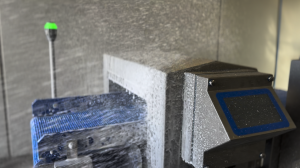
Filmado na planta do cliente: produto carregado ao nível do solo, inspecionado na inclinação e descarregado na entrada do britador.

Construído para a planta, não para um comprimento padrão
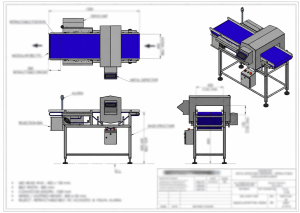
O objetivo principal de um transportador inclinado é que ele precisa alcançar uma máquina específica a uma altura específica. Nós construímos a estrutura de acordo com a sua altura de descarga, ângulo de inclinação, largura da correia e espaçamento das taliscas — e a construímos em nossa própria oficina, de modo que uma alteração no layout passa a ser uma revisão de projeto em vez de um novo fornecedor.
- Altura de descarga e ângulo de inclinação definidos pelo seu projeto
- Largura da correia e altura da talha definidas pelo produto
- Funil, proteções laterais e pés de apoio adequados ao método de carregamento
- Posição de controle e interface do operador localizadas no local onde o operador fica
| Função | Transportador inclinado com talas e detector de metais integrado |
|---|---|
| Cinto | Correia modular com saliências; altura e passo das saliências especificados para o produto |
| Largura, comprimento e inclinação da esteira | Construído de acordo com o layout da fábrica — A pedido |
| Altura de descarga | Construído para a máquina receptora — A pedido |
| Construção | Estrutura em aço inoxidável, design higiênico, pés de nivelamento vedados |
| Limpeza | Liberação de correia sem ferramentas; especificação para lavagem disponível |
| Rejeitar acordo | Especificado com a aplicação — a maioria das instalações para a correia e sinaliza, em vez de rejeitar em um plano inclinado |
| Sensibilidade alcançável | A pedido — depende da largura da correia, do produto e da temperatura |
Cada transportador inclinado é uma máquina feita sob medida. Envie-nos o layout — a máquina receptora, a altura e o produto — e retornaremos com um desenho.
Envie-nos o layout
Diga-nos o que o transportador deve alimentar, qual altura ele precisa atingir e qual é o produto. Se você tiver um desenho de planta ou até mesmo uma fotografia do espaço, isso geralmente é suficiente para retornarmos com uma proposta.
Envie-nos o seu produto — nós mediremos o que pode ser detectado
Você recebe um relatório de teste por escrito com a descrição do equipamento, condições de teste, taxa de rejeição falsa e probabilidade de detecção. Normalmente dentro de uma semana. Não custa nada e não assume nenhum compromisso.