









Metaldetektering af fisk og skaldyr
Fisk og skaldyr er blandt de mest krævende produkter til metaldetektion. Det høje indhold af fugt og salt skaber et stærkt produkteffekt, som kan gøre små metalliske fremmedlegemer vanskelige at skelne fra selve produktet.
Samtidig arbejder udstyret i et miljø med konstant fugt, hyppig nedvaskning og krævende hygiejnekrav. Vores systemer er designet til begge sider af udfordringen: pålidelig detektering i ledende produkter og en konstruktion, der kan modstå virkeligheden i fiskeindustrien.
Hvad dukker der typisk op ved fiskeforarbejdning
- Kroge og krogfragmenter fra linefiskeri, som ikke blev fjernet under rensningen
- Tråd fra net og bure, ofte rustfrit stål
- Knivfragmenter fra filet- og halshugningsmaskiner
- Dele fra skrælle- og sorteringsmaskiner — skruer, fjedre, slidte bøsninger
- Hæfteklammer og clips fra kasser og emballage ved modtagelse
Havvand, saltlage og is — det hele leder strøm
Fisk indeholder både meget vand og meget salt. Saltlage, glasur og is hjælper ikke. For detektoren betyder det den stærkeste produkteffekt, man kan finde inden for fødevareproduktionen.
Derudover reagerer frosne og optøede udgaver af det samme produkt forskelligt i detektorens felt. En detektor, der er indstillet til et frosset produkt, vil give falske afvisninger på den optøede udgave – og omvendt. Det håndteres med separate produktprogrammer, som operatøren skifter imellem ved produktskift.
Er du ikke sikker på, hvad der kan registreres i dit specifikke produkt? Send os en prøve. Du får en skriftlig testrapport med fejlforhold for afvisning og sandsynlighed for detektion – gratis og normalt inden for en uge.
Permanent vådt er hårdere end periodisk vådt
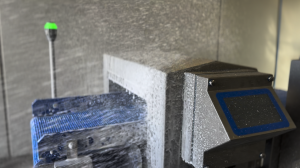
I fiskeforarbejdning er linjen ikke bare våd under rengøring – den er våd hele tiden. Isvand, smeltevand og spulevand står konstant omkring udstyret. Det er her, tæthedsgraden holder op med at være en databladsspecifikation og bliver til driftsøkonomi.
Detectronic har udviklet detektorer, der er konstrueret til at fungere under krævende våde forhold. Inden for fisk og skaldyr er det ikke en kuriositet – det er den relevante designforudsætning.
IP68IP69KBygget til undervandsdrift
Det vi normalt leverer
Pakning og portionering
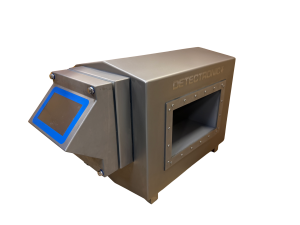
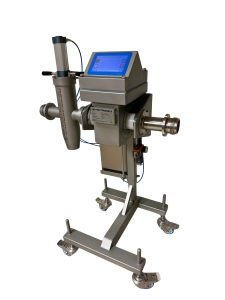
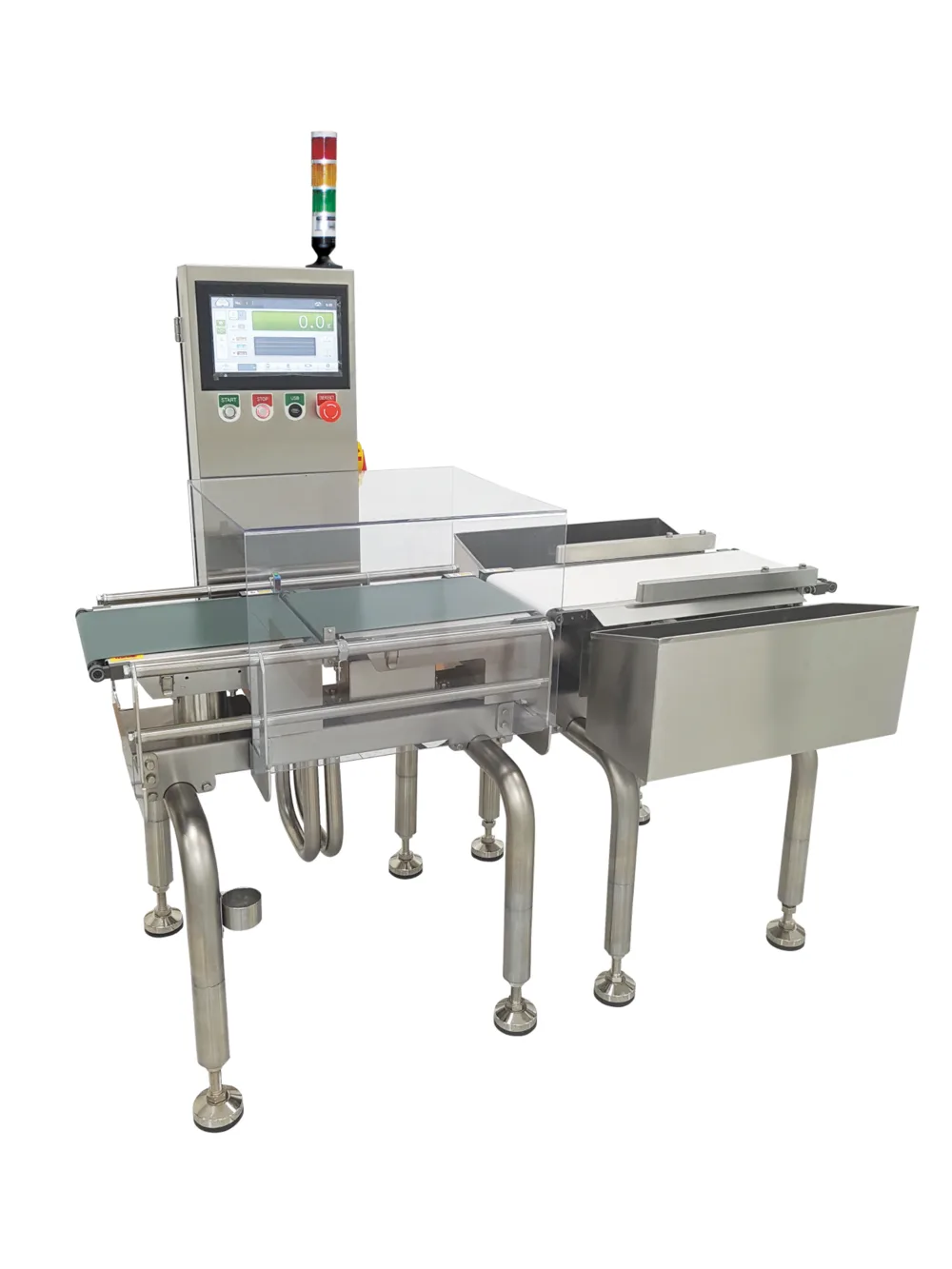
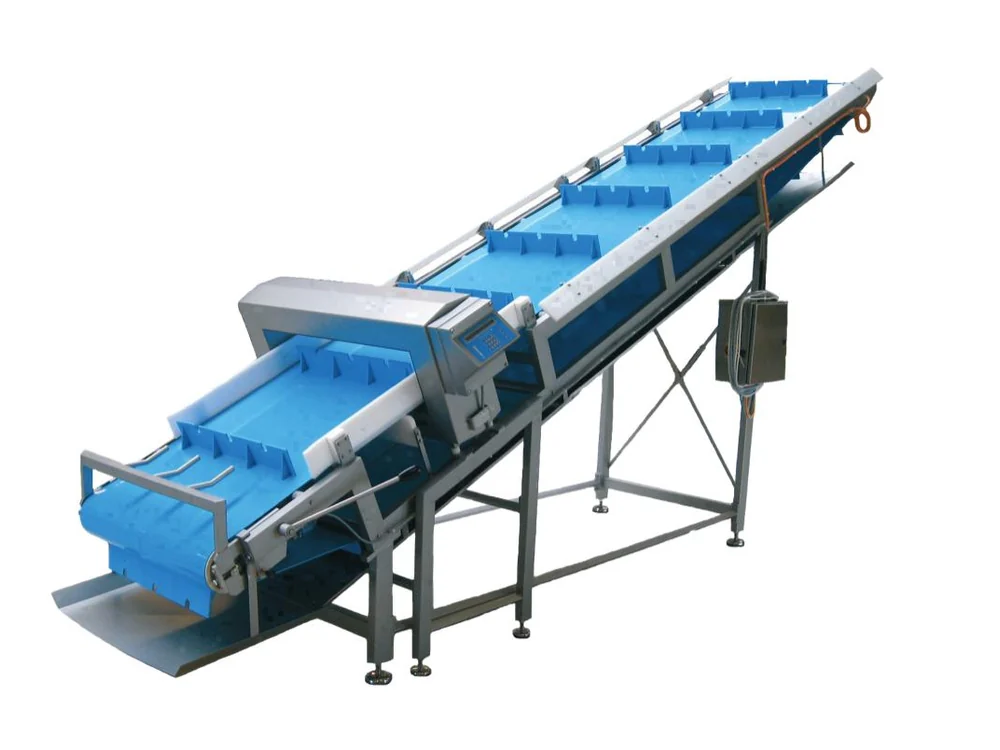
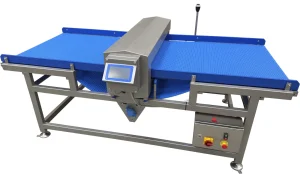
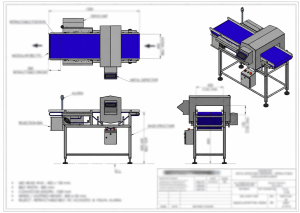
Komplet system med transportbånd og automatisk afvisning, bygget til et permanent vådt miljø.
Filetering og flåning
Detektorhoved i en eksisterende linje, hvor produktet udpakkes.
Frosne blokke
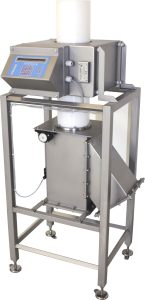
Forstærket bloktransportørsystem med stor åbning til frosne blokke.
Kører du både frossen og frisk?
Produktprogrammerne bør derfor fastlægges ved at teste både det frosne og det ferske produkt. Ellers ender man med falske afvisninger i det ene tilfælde og utilstrækkelig følsomhed i det andet — og i praksis vil nogen løse det ved at skrue ned for følsomheden.
Send os en prøve fra hver tilstand. Vi tester dem begge og giver dig tallene for hver enkelt, så HACCP-planen kan fastlægge en velbegrundet kritisk grænseværdi for hvert program.